Loading…
Back to Blog
Halal Meat and Poultry Processing: Standards, Slaughter Requirements, and Certification
HalalExpo Editorial TeamMarch 16, 20267 min readCertification Standards
A practical guide to halal slaughter requirements and meat processing standards — covering JAKIM, SFDA, and BPJPH regulations, mechanical vs hand-slaughter debates, and what manufacturers need to know to get certified.
Editorial note: Market figures cited in this article are estimates based on publicly available industry reports and may vary by source. HalalExpo.com aims to present the most current data available but readers should verify figures for business decisions. Sources include the State of the Global Islamic Economy Report, DinarStandard, and national halal authority publications.
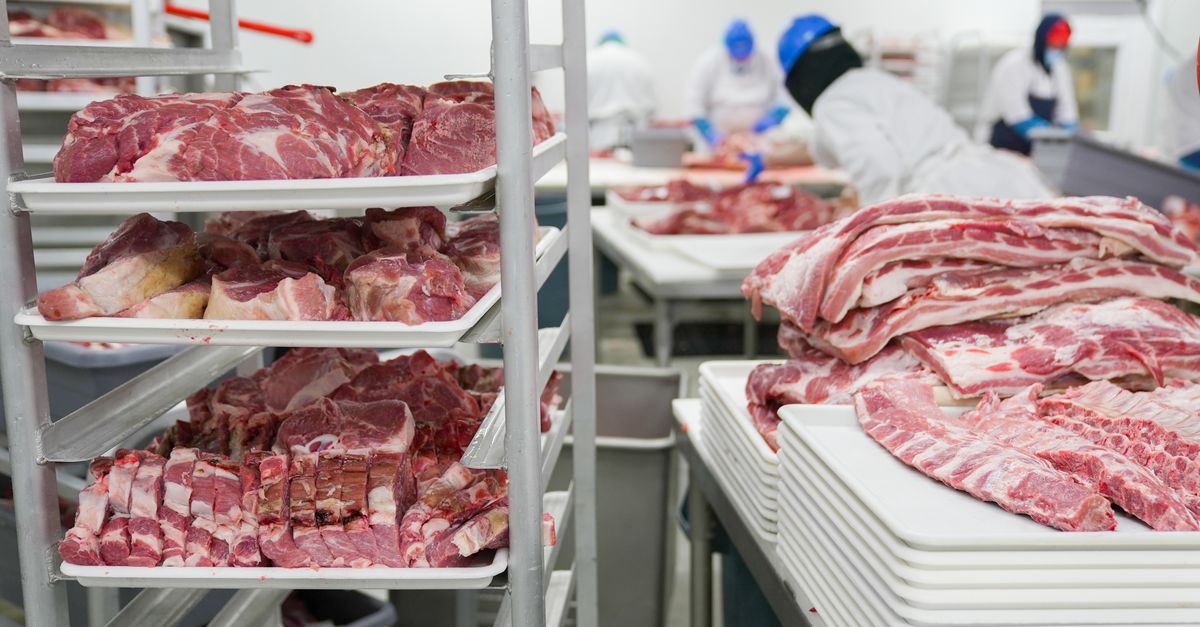
Halal meat processing refers to the slaughter, handling, and preparation of meat and poultry in strict accordance with Islamic law (Shariah). For a product to qualify as halal, every step of the supply chain — from the live animal to the packaged product — must meet specific requirements covering animal welfare, slaughter method, handling, and facility hygiene. With the global halal meat market valued at over $200 billion annually, understanding these standards is essential for any manufacturer, exporter, or food service operator targeting Muslim consumers.
Core Requirements for Halal Slaughter
Halal slaughter is governed by a set of principles that apply across all major certification frameworks. While interpretations vary between certification bodies, the following requirements are universally accepted:
- The animal must be alive and healthy at the time of slaughter — animals that are already dead, diseased, or severely injured do not qualify.
- The slaughterer must be Muslim (or, in some interpretations, a practicing Christian or Jew) and must be of sound mind and maturity.
- Tasmiyah (invocation) — the phrase Bismillah Allahu Akbar must be recited at the moment of slaughter.
- The cut must sever the trachea, oesophagus, and both jugular veins in a single, swift motion using a sharp blade.
- Blood must drain completely — the carcass must be allowed to bleed out fully before further processing.
- Stunning rules vary — some certification bodies permit reversible pre-slaughter stunning; others (including JAKIM Malaysia and most Gulf standards) require unstunned hand-slaughter.
Key Standards by Region
JAKIM (Malaysia)
JAKIM is Malaysia's Department of Islamic Development and operates the Malaysian Halal Certification Scheme (MHCS), one of the most widely recognised halal standards in Asia and the Middle East. Under JAKIM's MS 1500:2019 standard:
- Mechanical slaughter is permitted for poultry only, provided the machine is operated by a Muslim and the invocation is made continuously or per bird.
- Stunning is only permitted if it is reversible — the animal must remain alive at the point of cut.
- Facilities must operate dedicated halal slaughter lines with no cross-contamination from non-halal operations.
- On-site JAKIM-trained halal supervisors must be present during all slaughter sessions.
JAKIM certification is required for all meat and poultry products entering Malaysia. It is also widely accepted as a benchmark by buyers in Singapore, Brunei, and parts of the Middle East.
BPJPH (Indonesia)
BPJPH (Badan Penyelenggara Jaminan Produk Halal) became Indonesia's mandatory halal certification authority in 2019. As the world's largest Muslim-majority country, Indonesia's standards carry significant weight for any manufacturer exporting to Southeast Asia.
- All meat and poultry products sold in Indonesia must carry BPJPH halal certification as of October 2024.
- Indonesia does not recognise mechanical slaughter as halal — hand slaughter is required for all species.
- BPJPH has mutual recognition agreements with a growing number of international certification bodies, but foreign exporters must apply through an approved BPJPH-partner inspection body.
- The certification process includes facility inspection, document review, and ongoing surveillance audits.
SFDA (Saudi Arabia)
The Saudi Food and Drug Authority (SFDA) enforces some of the strictest halal meat standards in the world, reflecting the regulatory requirements for the Saudi market and much of the Gulf Cooperation Council (GCC).
- All imported meat and poultry must carry halal certification from an SFDA-approved foreign body — exporters must verify approval status before shipping.
- Mechanical slaughter is not recognised for the Saudi market — hand slaughter is mandatory across all species including poultry.
- Saudi standards require the slaughterer to recite the tasmiyah individually for each animal or bird (not collectively via recording).
- Chilling and storage must prevent cross-contamination with non-halal products at all stages of the cold chain.
Mechanical vs Hand Slaughter: The Key Debate
One of the most commercially significant divisions in global halal standards is the question of mechanical slaughter — particularly for poultry. High-speed processing plants can slaughter tens of thousands of birds per hour using automated cutting machinery, making hand slaughter at scale both costly and logistically difficult.
| Certification Body | Mechanical Slaughter (Poultry) | Pre-Slaughter Stunning |
|---|---|---|
| JAKIM (Malaysia) | Permitted with conditions | Reversible only |
| BPJPH (Indonesia) | Not permitted | Not permitted |
| SFDA (Saudi Arabia) | Not permitted | Not permitted |
| HFA (USA/UK) | Permitted with conditions | Reversible only |
| IFANCA (USA) | Permitted with conditions | Reversible only |
| MUI (Indonesia) | Not permitted | Not permitted |
For exporters targeting multiple markets, this divergence creates compliance complexity. A facility certified under JAKIM may not be accepted by Saudi SFDA buyers without additional audits or process changes. Building a dual-certified facility — or segmenting production lines — is increasingly common among large-scale exporters.
Facility and Handling Requirements
Beyond the act of slaughter, halal meat certification covers the entire post-slaughter handling chain:
- Dedicated facilities or certified cleaning procedures — shared facilities processing both halal and non-halal products require rigorous cleaning validation between runs.
- Ingredient verification — marinades, seasonings, glazes, and processing aids must all be halal-certified. Use the HalalExpo Ingredient Checker to screen common additives.
- Packaging materials — some certification bodies audit packaging for animal-derived inks, coatings, or adhesives.
- Cold chain integrity — refrigerated transport and storage must prevent contact with non-halal products.
- Labelling — certified products must display the appropriate halal logo with the certification body's mark and certificate number.
Getting Your Facility Certified: 4 Stages
- Self-assessment — review your slaughter methods, facility layout, and ingredient list against the requirements of your target certification body.
- Application and document submission — submit process flowcharts, ingredient declarations, and facility plans to the chosen certifier.
- On-site audit — an inspector from the certification body (or an approved third party) visits your facility to verify compliance.
- Certificate issuance and ongoing surveillance — certificates are typically valid for one to two years, with annual surveillance audits.
If you are targeting multiple export markets, engage a consultant familiar with mutual recognition agreements early in the process — this can reduce the number of separate audits required.
Next Steps
Browse the full directory of halal certification bodies on HalalExpo.com to find approved inspectors for your target market. Use the Ingredient Checker to verify the halal status of processing additives and marinades before your audit. For industry events covering food processing standards and trade, explore the global halal events calendar.
For Halal Businesses
Is your business listed on HalalExpo?
Join 5,198 halal companies. Claim your free listing and connect with buyers worldwide.
More from Certification Standards
Certification Standards
Halal Certification for Small Businesses: Simplified Guide
A plain-language guide for SMEs in food, cosmetics, and pharma covering the full halal certification process — from document preparation to certificate issuance — with costs, timelines, and key certifiers by region.
H
HalalExpo Editorial TeamCertification Standards
Halal Certification for Small Businesses: Simplified Guide
A practical guide to halal certification for small businesses, covering costs, timelines, documentation requirements, and step-by-step processes for food producers, restaurants, and retail operations.
S
Sarah ChenCertification Standards
Halal Toothpaste and Oral Care: What to Check
Many mainstream toothpastes contain glycerin from unknown sources, alcohol-based flavour carriers, or fluoride compounds that raise questions. Here's what makes toothpaste haram, what to look for on labels, and the top halal-certified brands.
D
Dr. Ahmad HassanCertification Standards
Shariah Audit: What It Means for Halal Businesses
A practical guide to Shariah auditing for halal businesses: what auditors examine, how to prepare, the difference between Shariah audit and halal certification, and frameworks used globally.
I
Ibrahim Al-RashidCertification Standards
How to Choose the Right Halal Certification Body for Your Business
Choosing the wrong halal certifier can lock you out of key markets. This guide covers accreditation, market recognition, costs, and the questions to ask before committing.
H
HalalExpo Editorial