Loading…
Back to Blog
Halal Certification in the Middle East & GCC — What Exporters Need to Know
Dr. Yusuf HassanMarch 16, 202610 min readCertification Standards
The GCC is the world's largest halal import market — but getting your products in requires understanding SFDA, ESMA, GSO standards, and the approval lists each country maintains. This guide covers every GCC and Middle Eastern halal authority, the GSO 2055 standard, and why Saudi Arabia is the hardest market to crack.
Editorial note: Market figures cited in this article are estimates based on publicly available industry reports and may vary by source. HalalExpo.com aims to present the most current data available but readers should verify figures for business decisions. Sources include the State of the Global Islamic Economy Report, DinarStandard, and national halal authority publications.
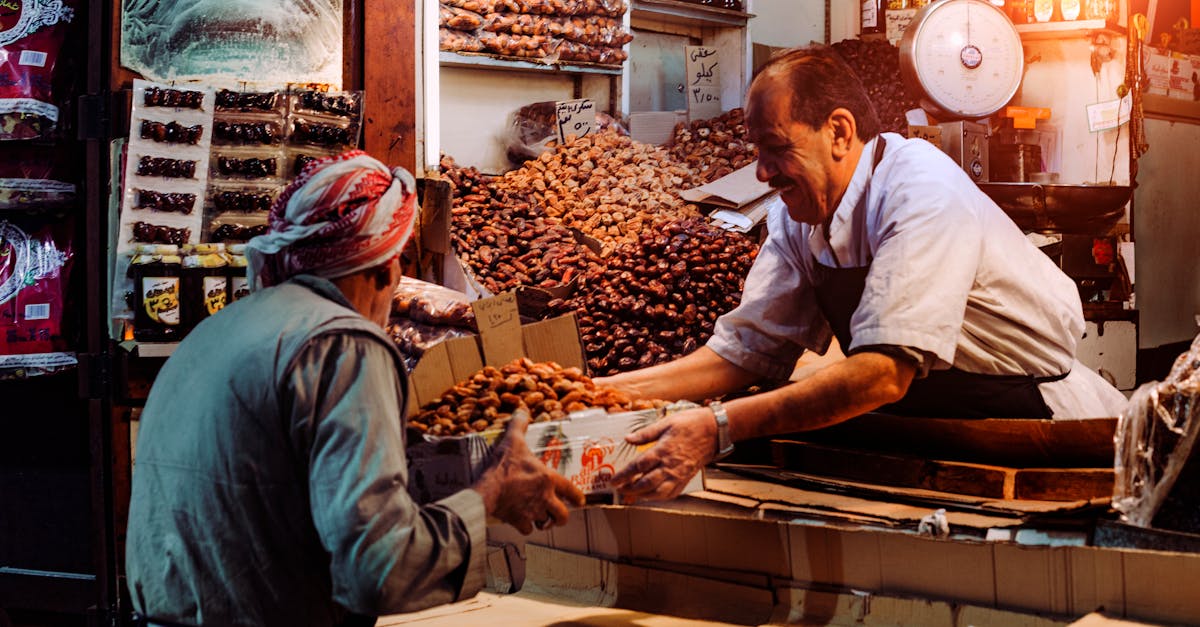
The GCC Halal Import Market: Why It Matters
The six Gulf Cooperation Council countries — Saudi Arabia, UAE, Qatar, Kuwait, Bahrain, and Oman — collectively import over USD 55 billion in food products annually. Every single product sold in these markets must be halal-compliant under Islamic law, and all six countries maintain mandatory halal certification requirements for imported food. For exporters, the GCC is not an optional add-on market — it is the most commercially concentrated halal consumer market on the planet.
Understanding the GCC halal regulatory landscape is not a bureaucratic exercise. It is the critical path to market access. Get it wrong — by choosing an unrecognised certifier, mislabelling a product, or misunderstanding which GSO standard applies — and your shipment will be refused at port, seized, or destroyed. Get it right, and you access a market where halal premium pricing, brand loyalty, and import volumes create exceptional margins for compliant exporters.
This guide covers the halal regulatory authority in each GCC country, the pan-GCC GSO standard that underlies all of them, and the practical steps exporters need to take to achieve and maintain GCC market access.
The GSO Standard: The Foundation of GCC Halal
The Gulf Standardisation Organisation (GSO) — the standards body of the GCC — publishes the halal standards that underpin all six GCC countries' import requirements. The two critical standards are:
- GSO 2055-1:2015 — General Requirements for Halal Food. This is the foundational standard covering what makes food halal: permitted animals, permitted slaughter methods, prohibited substances, handling, storage, and labelling requirements. All GCC countries apply this standard for imported food.
- GSO 2055-2:2015 — Halal Requirements for Food Establishments and Businesses. This standard covers the operational requirements for facilities producing halal food — from ingredient management through to packaging and cold chain. Manufacturers seeking GCC market access should audit their operations against this standard before applying for certification.
When GCC countries reference "halal standards," they mean GSO 2055-1 as the baseline. Certifiers whose standards are substantially equivalent to GSO 2055-1 are eligible for GCC country approved lists. This is why JAKIM (Malaysia's MS 1500) and UAE ESMA (which directly references GSO 2055-1) are so broadly accepted: their standards align directly with the GCC baseline.
Saudi Arabia — SFDA (The Hardest Market)
SFDA (Saudi Food and Drug Authority) is Saudi Arabia's halal regulatory authority and the most rigorous halal import regime in the world. Saudi Arabia is the largest single GCC food import market (USD 20+ billion annually) and is the destination market that most exporters target first — but it is also the one with the most demanding and frequently updated certification requirements.
Key facts about Saudi halal market access:
- SFDA maintains its own approved list of foreign halal certification bodies, updated regularly. Certification from a body not on this list will result in import refusal.
- Saudi Arabia applies specific slaughter requirements: all meat must be slaughtered by a Muslim, by hand, with the correct recitation, and most categories require individual animal slaughter (mechanical slaughter is accepted only for poultry with specific conditions).
- Alcohol — including very small traces in food flavourings and additives — is strictly prohibited. Saudi halal standards are among the most conservative on this point globally.
- Saudi Arabia requires halal certificates to be issued for each shipment in addition to a company/product certification. Documentary requirements are extensive.
For most exporters, achieving SFDA-accepted certification means obtaining certification from a body that is already on SFDA's approved list — such as JAKIM (Malaysia), LPPOM MUI (Indonesia), or an approved European or American certifier. Check the current SFDA approved list before choosing your certifier.
UAE — ESMA
ESMA (Emirates Authority for Standardisation and Metrology) is the UAE's national standards body and the authority that publishes the UAE halal standard (UAE.S GSO 2055-1 — directly equivalent to the GCC GSO standard). The UAE Ministry of Climate Change and Environment (MOCCAE) maintains the approved list of foreign halal certification bodies whose certificates are accepted for UAE imports.
The UAE is the GCC's most commercially open halal market and the largest food re-export hub in the region. Dubai's Jebel Ali Free Zone serves as the transit point for halal food products re-exported to Saudi Arabia, Qatar, and other GCC markets. UAE market entry is often the strategic first step for exporters building GCC distribution — once established in UAE retail and distribution networks, regional expansion follows more naturally.
ESMA has active bilateral halal recognition agreements with JAKIM (Malaysia), LPPOM MUI (Indonesia), MUIS (Singapore), CICOT (Thailand), and numerous European and American certifiers. The MOCCAE approved list covers 100+ foreign certification bodies.
Qatar
Qatar's halal import requirements are administered through the Ministry of Public Health and align with GSO 2055-1. Qatar is a high-income, high-volume food import market (per capita food import spend is among the world's highest) with premium demand for certified halal products across all categories. Qatar applies SFDA-adjacent stringency for meat products but is somewhat more flexible than Saudi Arabia on processed foods and ingredients.
Qatar has bilateral recognition with JAKIM, MUI, and several European bodies. Post-2022 World Cup, Qatar's food safety and halal regulatory framework has been significantly upgraded — verify your certifier's current Qatar recognition status as the approved list evolves.
Kuwait
Kuwait Municipality and the Ministry of Health jointly administer halal food import requirements in Kuwait. Kuwait applies GSO 2055-1 as the base standard and maintains its own approved certifier list. Kuwait is notable for being one of the stricter GCC markets on gelatin and alcohol-derived ingredients in processed foods. Exporters of confectionery, bakery products, and processed foods should verify ingredient compliance carefully before targeting Kuwait.
Bahrain
Bahrain's halal import requirements are administered by the Ministry of Industry, Commerce and Tourism under the GSO 2055-1 framework. Bahrain's JSMO-equivalent body — the Bahrain Standards and Metrology Directorate — maintains the approved certifier list. Bahrain is the smallest GCC market by volume but strategically important as a gateway to the Saudi market (connected by the King Fahd Causeway) and as a regional financial and services hub.
Oman
Oman's halal requirements are administered by the Ministry of Agriculture, Fisheries and Water Resources and align with the GSO framework. Oman is a growing food import market — particularly for premium and health food categories — and applies JAKIM and LPPOM MUI recognition for SE Asian products.
Jordan — JSMO
JSMO (Jordan Institution for Standards and Metrology) administers Jordan's halal standards and certification framework. Jordan is not a GCC member but is a major Middle Eastern food market and a significant distribution hub for Levant-region trade (Syria, Iraq, Palestine, Lebanon). JSMO's halal standards align with OIC/SMIIC standards and are recognised by several GCC countries for Jordanian-origin products. Jordan's proximity to major Middle Eastern markets makes it a valuable secondary certification for exporters targeting the broader Arab world.
GCC Halal Certifier Comparison Table
| Country | Authority | Base Standard | Stringency Level | Market Size (Food Imports) | Approved List? |
|---|---|---|---|---|---|
| Saudi Arabia | SFDA | GSO 2055-1 | Highest | ~USD 20B+/yr | Yes — SFDA published list |
| UAE | ESMA / MOCCAE | UAE.S GSO 2055-1 | High | ~USD 12B+/yr | Yes — MOCCAE published list |
| Qatar | Ministry of Public Health | GSO 2055-1 | High | ~USD 4B+/yr | Yes |
| Kuwait | Kuwait Municipality | GSO 2055-1 | High | ~USD 4B+/yr | Yes |
| Bahrain | Standards and Metrology Directorate | GSO 2055-1 | Moderate-High | ~USD 2B+/yr | Yes |
| Oman | Ministry of Agriculture | GSO 2055-1 | Moderate-High | ~USD 3B+/yr | Yes |
| Jordan | JSMO | OIC/SMIIC-aligned | Moderate | ~USD 3B+/yr | Yes |
GCC Mutual Recognition: Does It Help Exporters?
The GCC countries operate under a customs union that theoretically allows goods cleared in one GCC country to move freely across the others. In practice, halal food products still face country-specific inspection requirements at the point of entry into each GCC state, and each country maintains its own approved certifier list. A product cleared by UAE customs with a MOCCAE-approved halal certificate can be re-exported to Saudi Arabia — but it will face additional documentation scrutiny at Saudi entry points.
For exporters, the practical implication is: obtain halal certification from a body recognised by your primary target market, and verify recognition in all secondary GCC markets before shipping. Do not assume UAE recognition automatically confers Saudi acceptance.
Strategic Recommendations for GCC Exporters
- Start with UAE: MOCCAE's approved list is the most accessible entry point. UAE market entry builds credibility and distribution infrastructure for broader GCC expansion.
- Verify your certifier on every GCC country's approved list before your first shipment. Lists are updated annually and bodies are added and removed.
- For Saudi Arabia specifically: If your current certifier is not on SFDA's approved list, consider obtaining dual certification with an SFDA-approved body for Saudi-bound shipments.
- Align with GSO 2055-1: Ensure your production facility and supply chain can be audited against GSO 2055-1 before applying for any GCC-recognised certification. This standard will be the audit framework.
For a complete directory of halal certifiers with GCC recognition status, visit our Halal Certifier Directory. For Southeast Asian certifiers accepted in the GCC, see our SE Asia Halal Certification Guide.
For Halal Businesses
Is your business listed on HalalExpo?
Join 5,198 halal companies. Claim your free listing and connect with buyers worldwide.
More from Certification Standards
Certification Standards
Organic + Halal: Can You Have Both Certifications?
Organic and halal certifications serve different compliance frameworks, but they share a common emphasis on product integrity and transparent supply chains. This article examines whether a food product can hold both certifications simultaneously, where the standards align, and where they diverge.
D
Dr. Yusuf IbrahimCertification Standards
Halal Certification for Small Businesses: Simplified Guide
A practical guide to halal certification for small businesses, covering costs, timelines, documentation requirements, and step-by-step processes for food producers, restaurants, and retail operations.
S
Sarah ChenCertification Standards
Halal Toothpaste and Oral Care: What to Check
Many mainstream toothpastes contain glycerin from unknown sources, alcohol-based flavour carriers, or fluoride compounds that raise questions. Here's what makes toothpaste haram, what to look for on labels, and the top halal-certified brands.
D
Dr. Ahmad HassanCertification Standards
Shariah Audit: What It Means for Halal Businesses
A practical guide to Shariah auditing for halal businesses: what auditors examine, how to prepare, the difference between Shariah audit and halal certification, and frameworks used globally.
I
Ibrahim Al-RashidCertification Standards
How to Choose the Right Halal Certification Body for Your Business
Choosing the wrong halal certifier can lock you out of key markets. This guide covers accreditation, market recognition, costs, and the questions to ask before committing.
H
HalalExpo Editorial